WHAT IS TITLE IX? UNDERSTANDING ITS HISTORY AND IMPACT
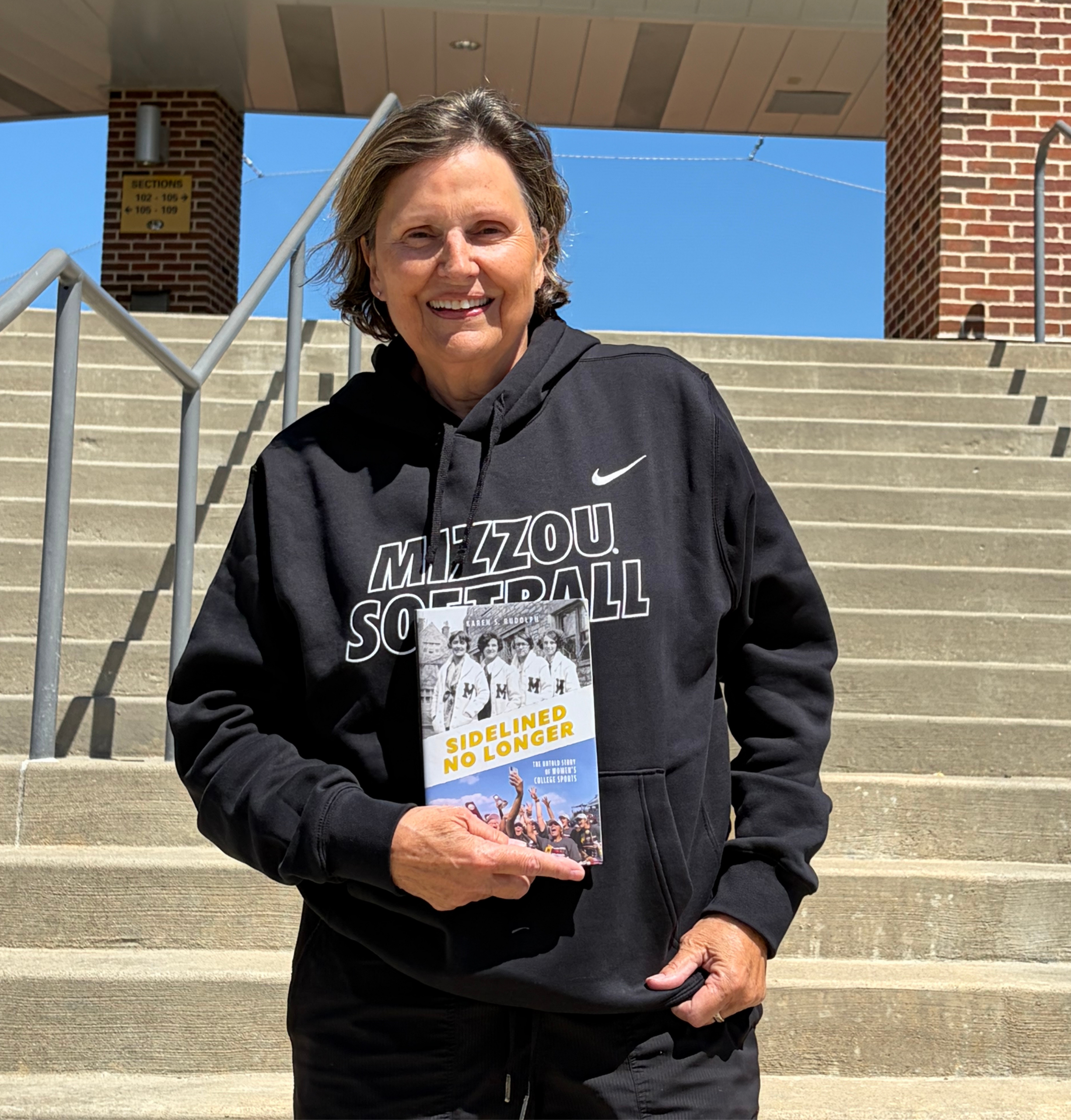
By Karen Rudolph
Author
Title IX did not create women’s sports. Women were already playing, coaching, organizing championships, and fighting for opportunity. What Title IX did was give those efforts the force of federal law. It required educational institutions to examine systems that had long treated opportunities for women differently.
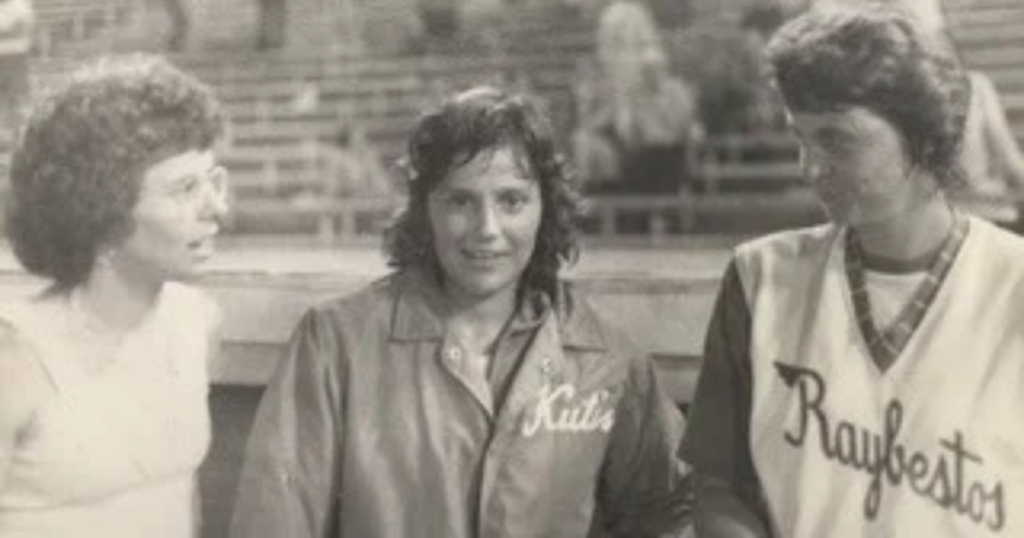
By the late 1960s, women were already building collegiate sports and governance structures like the AIAW (Association for Intercollegiate Athletics for Women).
I fondly recall how my dad took my twin sister and me, first graders at the time, to the women’s Amateur Athletic Union national championships in St. Joseph, Missouri, in the 1960s. The tournament, started in the 1920s, featured teams like the Raytown (MO) Piperettes, Wayland Baptist College, and Nashville Business College. Their flashy satin uniforms impressed me, and I dreamed of the day that maybe I could play, even if it was a half-court game. It looked like so much fun.
While attending graduate school at the University of Iowa in 1969, Jean Cerra, featured in my book Sidelined No Longer, The Untold Story of Women’s College Sports, was assigned to coach the first women’s golf team. But when Cerra arrived with her team to practice at the nearby university-owned golf course, the club pro ran out to the cars where they were unloading their equipment, asked what they were doing, and said women were not allowed on the course.
He suggested another course near the Iowa River, alongside the railroad tracks. It flooded frequently. A year passed before they could play the main university course. A team member’s father was in the state legislature and insisted that the course be available to the women’s team. Even then, it was only on Mondays, when course maintenance occurred.
Title IX and the Law
Title IX was enacted as part of the Education Amendments of 1972. Its core message is remarkably short: people cannot, on the basis of sex, be excluded from participation in, denied benefits of, or be subjected to discrimination under federally funded education programs.
Title IX was not written as a sports law.
The language was simple. Its implementation was anything but.
Things were changing on campuses across the nation, with small but certain steps toward progress, including at my alma mater, the University of Missouri.
The first women’s athletic scholarships were awarded in 1975: six to women’s basketball and three to each of the remaining seven teams, for a total of 27. They covered one semester’s tuition, $292, along with a work/study component that allowed athletes to earn their second-semester tuition.
We taped the football players’ ankles before practice, called lines at intercollegiate volleyball matches, worked the scorers’ table at basketball games, and served in the press box at football games.
Athletes still bought their own training gear, paid for their room and board, traveled in white school vans driven by the coaches, and played limited schedules mostly within the state, since that was what the women’s governing organization, the AIAW, allowed.
The softball team practiced and played games at elementary schools or on city recreational fields, players sharing rides. If players had late classes and missed the car pool, they jumped on a 10-speed and rode furiously to the field.
The female student athletes wanted more. It was my responsibility to present that to the campus leaders who reviewed Title IX.
Three years after Title IX passed, I sat repeatedly in committee meetings as one of two students representing every woman athlete on campus. Alongside academics and administrators, we assessed how the law was implemented at the University of Missouri. Chancellor Herb Schooling appointed each committee member. I spent hours listening and learning, researching and reviewing, but I also knew it was important to speak up. We were all trying to figure out what those 37 words actually meant and how best to report our findings.
Evaluating Opportunity
Women’s athletics were growing, but still housed in the women’s physical education department in a tiny office in McKee Gym, with a couple of desks, a file cabinet, a storage closet, an answering machine, and a single administrative assistant. Most of the coaches also taught PE classes.
Meanwhile, the Department of Intercollegiate Athletics was headquartered in the Hearnes Multipurpose Center, a huge boxy building on the south side of campus, next to the football stadium. A 13,000-seat arena occupied half of the building, with a field house and indoor track on the other side.
The building opened its doors in 1972 with zero accommodations for women athletes. Sure, there were public restrooms. But no locker rooms for women.
The athletic director dismissed the oversight and scoffed in the 1976 Title IX report that “apparently no one had envisioned a full-blown women’s athletic program” when the building, paid for by Missouri taxpayers, was designed a few years prior.
One of the first Title IX court cases occurred in New Mexico. A future Hall of Fame golfer, then a young high school phenom named Nancy Lopez, had won the United States Girls Junior National championship and wanted to play on the school golf team. But there was no girls team, and the state activities association rejected her request to play against boys.
Lopez and her parents went to court, alleging that the state activities association discriminated against parents with daughters and not sons. The judge agreed, and Lopez, playing against boys, won two state championships and went on to a stellar professional career.
Title IX did not begin the movement. It changed the leverage available to women leading it.
Title IX rules required that all institutions complete an institutional self-evaluation report that investigated all areas of campus life. I reported on an area I knew well: intramural competition. Other committee members researched the law school, engineering, medicine—every academic area.
But intercollegiate athletics were the most compelling, public-facing and possibly controversial.
For some unknown reason, I saved the completed institutional report, keeping it in my files for fifty years through numerous personal moves while thinking that someday it might be important to recall the outcomes and my role in those meetings.
It was.
I included a chapter in Sidelined No Longer about that process and the Title IX requirements. It was typical of what was happening nationwide.
What Compliance Meant
Compliance meant more than adding women’s teams. It required institutions to evaluate how opportunity itself was structured.
Federal enforcement today looks broadly at three areas:
- Participation opportunities reflecting students’ interests and abilities
- Athletic financial assistance
- Equivalent treatment and benefits across programs
The Title IX Self-Evaluation Report meant institutions had to start asking questions they hadn’t previously considered, questions like:
- Who gets scholarships?
- Who gets practice time?
- Who travels?
- Who gets coaching?
- Who gets adequate facilities?
- Who gets publicity?
- Whose interests and abilities are being accommodated?
The University of Missouri’s report was released in July 1976. Jean Cerra was asked to review the findings and comment on them six weeks after being hired, which coincided with women’s athletics joining the Department of Intercollegiate Athletics and moving to the Hearnes Multipurpose Center.
Why Title IX Still Matters
This cultural change and Title IX’s application to athletics was debated intensely and created conflict.
Lynn Lashbrook, a former Division I Director of Athletics who worked with Cerra at Missouri and now heads Sports Management Worldwide, a training and educational organization, said that Title IX had a bad rap for years.
“Title IX was a negative word for the first ten years. All the athletic directors would just complain. There were quiet whispers all the time questioning female athletes.”
Lashbrook said this while being interviewed for Sidelined No Longer.
“Anyone who comes into sports now thinks that women’s sports opportunities have always been there. But the process took fifty years. That development never would have happened voluntarily with a bunch of white male athletic directors.”
He added that Title IX was something that government legislation got right.
Anne Marie Rogers recalls her first months on campus at the University of Alabama in 1974 as the incoming women’s athletic director. She had been at all-women’s Smith College but faced strong criticism in her new position, including numerous hostile letters to the editor in the school newspaper.
Students complained that the $75,000 budget allotted to women’s athletics would take away from football. They exaggerated false claims about Title IX and called it another attempt on the part of big government to meddle in the affairs of states.
To them, women’s sports were expensive and a worthless continuation of the social experimentation that had gone on in the country for too long.
Sidelined No Longer describes the turmoil in greater length.
Women overseeing women’s athletics also disagreed about the best path forward. Many wanted to protect AIAW’s educational philosophy. A small minority, including those profiled in Sidelined No Longer, believed female athletes needed greater access to scholarships, resources, recruiting, travel and national competition.
Women supported increased opportunities, but disagreed about the process.
Why Title IX Still Matters
Title IX brought incredible changes, but the biggest was that women expected to participate.
Women of my generation once had to petition school boards to create opportunities. One generation opened a door so those who follow don’t have to knock. Now our daughters and granddaughters are taking those opportunities even further.
So, why are we still talking about Title IX?
Because equality is not a finish line that institutions cross once. Resources change. College sports change. Athlete expectations change. Institutions continually have to determine what equitable opportunity means within those changing circumstances.
Institutions themselves are continually evolving. Today the law reaches well beyond athletics and into sex discrimination across educational settings and all areas of student life.
I’ve written that history matters. That leadership creates opportunity.
Title IX opened doors, but people still had to walk through them, and even widen them for those coming behind. The women whose stories I tell in Sidelined No Longer understood that distinction.
They did more than demand compliance. They helped universities imagine new structures, new opportunities and a different future.
The most important lesson is that change may begin with legislation, but lasting progress depends on what people choose to build with it.