Why Women’s Sports History Still Matters
By Karen Rudolph
Author
A few years ago, I began interviewing former athletes and athletic administrators and digging through college library archives to better understand a pivotal moment in women’s sports history: the 1981 decision by the National Collegiate Athletic Association (NCAA) to offer women’s championships.
I was unsure of what I would find.
But I wanted to answer a larger question regarding what some might call “The Golden Age of Women’s Sports.”
How did women’s sports get here?
Women’s sports are experiencing extraordinary momentum.
Attendance records are falling.
Television audiences are growing.
Professional leagues are expanding.
College athletes have unprecedented visibility and influence.
Sponsors and investors increasingly recognize the value of women’s sports.
The energy is undeniable.
But, how did we get here?
And, perhaps more importantly, what will be done with this momentum?
TODAY’S OPPORTUNITIES WERE NOT INEVITABLE
This success did not happen simply because the time had finally come.
It rests on decisions made decades ago by administrators, athletes, coaches, educators, advocates and countless others who challenged assumptions about what women deserved.
And most importantly, what athletics could become.
In 1981, no one could have predicted accurately what might result from the NCAA’s decision to offer women’s championships. Existing women’s programs had fewer teams, shorter schedules, inadequate facilities, limited funding, few scholarships and almost no media attention.
Everything was less. The history of women’s athletics is difficult to uncover because so much occurred in a pre-digital era.
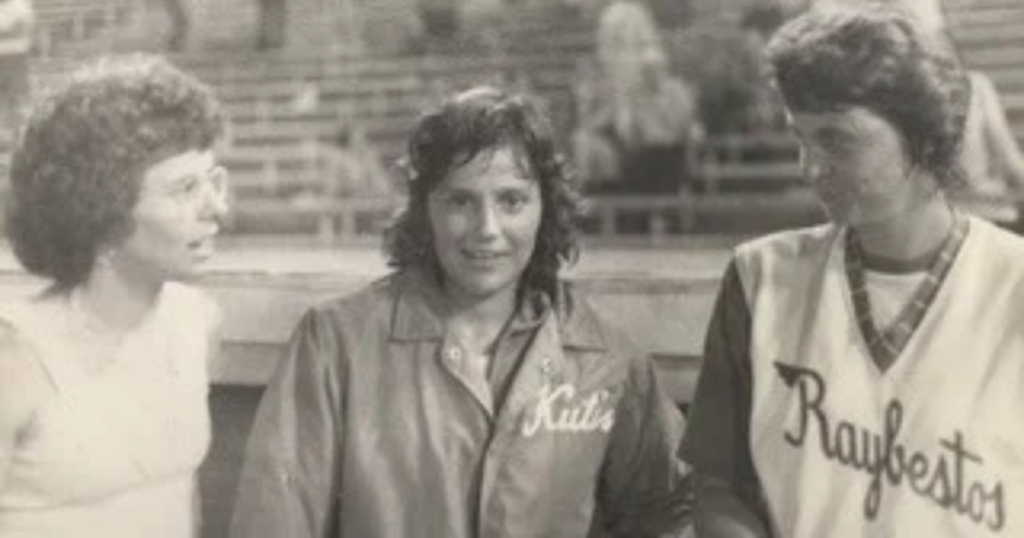
At my alma mater, the University of Missouri, the softball season in the mid-1970s lasted six to eight weeks, practices and games were held off campus on city recreational fields, and competition was mostly limited to state schools. Media coverage consisted of a paragraph or two in the school newspapers, the Maneater and the Campus Digest. Despite the challenges, we came within one game of qualifying for the Women’s College World Series three different years.
We truly played for the love of the sport.
The progress we see today was not inevitable. It was built. With purpose and intention.
By young women criticized as amazons or tomboys, derided as ‘unfeminine’ for simply wanting to play a sport they loved.
By athletic administrators who fought for bigger budgets.
By media emphasizing that women’s college sports were more than a novelty and deserved headlines and story lines, reader engagement and messaging.
When we understand how women’s sports were built, we may begin to see our own responsibility for the future differently.
The growth of women’s athletics required people to make difficult decisions about funding, governance, championships, facilities, recruiting, scholarships, and leadership.
From a young age, it was always my belief that if sports were good for boys—and they are—then likewise, sports are good for girls.
As a high school junior, my twin sister and I requested that the local school board initiate a girls’ basketball team. Missouri was just starting state championships for girls and I wanted to play. My sister and I came prepared with petitions signed by half of our high school classmates and a spreadsheet about costs, including coaches’ salaries, uniforms, transportation and potential opponents.
The school board listened carefully, respectful of a pair of nervous 16-year-old high schoolers. The room was packed, increasing the tension.
I remember the final question, and was reminded of that recently by a reporter who attended the meeting that night, my future brother-in-law.
“Karen,” the school board member intoned, “How do you think girls will feel when they are cut from the team after tryouts?”
I gathered myself, looked past the audience, and answered calmly, speaking clearly.
“How do you think boys feel when they are cut from the team after tryouts?”
The board members glanced at each other.
The vote was called.
And slowly, each board member’s hand rose affirmatively. It was a unanimous decision.
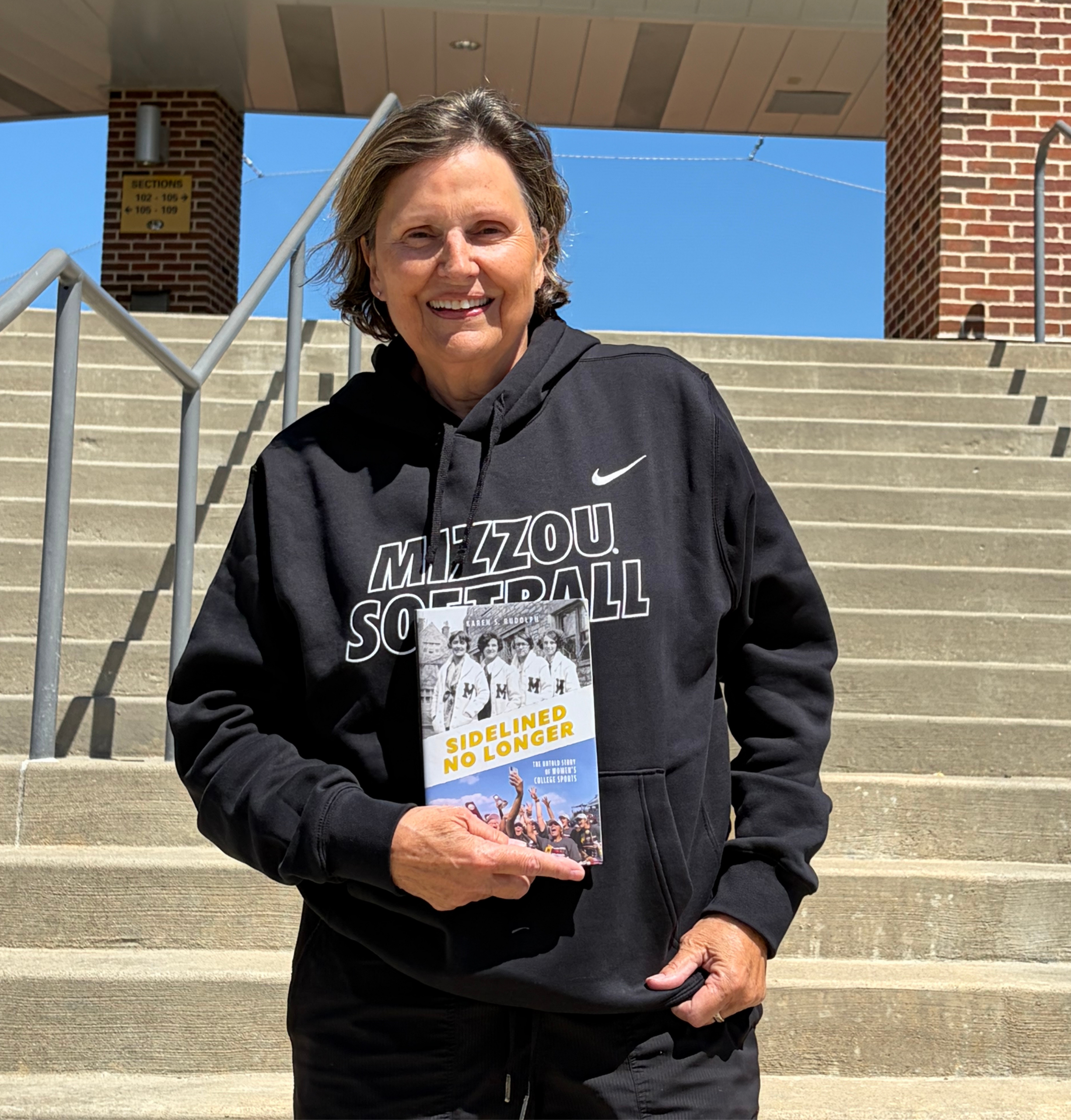
My book, Sidelined No Longer: The Untold Story of Women’s College Sports, explores the emotion, conflict and reasoned decision-making that helped transform collegiate athletics. What emerged from my research was not simply a sports story. It was a leadership story.
The women at the center of so many decisions could see what existed while imagining what someday might be possible.
But the outcome they hoped for, similar to what my sister and I had requested of our local school board, was never guaranteed.
When we understand what it took to create today’s opportunities, we appreciate them differently. I visited my hometown recently to talk about my book and shared the story about my interaction with the school board, much to the delight of the large audience of friends, former classmates and relatives. They were mostly unaware of that momentous meeting.
History transforms opportunity from something we simply inherit into something we understand and value.
THE GENERATION THAT OPENED THE DOORS
Consider Title IX.
The landmark federal civil rights law enacted in 1972 included just 37 words prohibiting sex discrimination in educational programs receiving federal financial assistance. Its impact on athletics was enormous. It certainly opened possibilities for me. I’m grateful for that.
Yet legislation alone did not build teams, create championships, fund scholarships or change attitudes.
People did.
A generation of leaders pushed open doors so that those who followed would not have to knock quite so hard.
By 1979, eleven women administrators at major Division I universities became deeply concerned about the future direction of the Association for Intercollegiate Athletics for Women (AIAW), the organization they had helped build and that had nurtured women’s collegiate competition. They also sensed a need to train future women athletic administrators, since no sports management programs existed to prepare them. The small group gathered at Stanford University in Palo Alto, California, and organized the Council of Collegiate Women Athletic Administrators (CCWAA), known today as Women Leaders in Sports, with 7,000 members.
They asked each other difficult questions.
Could women’s athletics thrive under the existing structure, especially at the large, highly competitive football-focused institutions they represented?
Could institutions meet emerging expectations for equitable access while operating men’s and women’s programs under fundamentally different systems?
Could another governance model provide women greater access to scholarships, recruiting, national competition and institutional resources?
These women leaders debated the most controversial question of all:
Could the NCAA provide a better path forward?
That idea elicited deep and divisive opinions throughout women’s sports.
Jean Cerra, the first women’s athletic director and assistant athletic director in a combined department at Missouri, who is featured prominently in Sidelined No Longer, debated that with Christine Grant, the legendary women’s athletic director at the University of Iowa. They had taken classes together in master’s degree programs at Iowa and knew each other well.
Both agreed that they wanted growth for women’s sports.
But, like Jean Cerra often has said, we disagreed on how to get there. And how quickly.
At the time, the NCAA had governed men’s intercollegiate athletics for 75 years and had historically been an overwhelmingly male institution. AIAW leaders understandably questioned whether moving women’s championships into the NCAA would expand pathways for women.
Or would they languish, with little support?
The disagreement was real and deeply felt. Remnants of that split remain still. No researcher has investigated the reasons behind why some women supported the move to the NCAA. After all, it was seen as unpopular. Even controversial within the women’s movement.
The AIAW had grown women’s intercollegiate athletics through physical education departments. It emphasized an educational model that sought to protect women’s sports from some of the excesses associated with men’s athletics. Its leaders had built something from nothing, despite overwhelming challenges. They defended their competitive sports model.
But other women increasingly sensed that the structure was limiting what women’s programs at larger universities could become.
They wanted scholarships, recruiting, national competition and integration into established athletic conferences and university athletic departments.
Neither the future nor the consequences were clear.
There were no guarantees.
HISTORY IS REALLY ABOUT LEADERSHIP
That uncertainty is precisely why this history still matters.
Progress requires people willing to challenge the status quo.
They must build relationships and coalitions, persist through disagreement, make difficult decisions and create expansion that they themselves might never fully enjoy.
Meaningful change rarely happens overnight.
The remarkable growth we see in women’s sports today is the result of decades of decisions building upon one another.
The biggest pivot of all may have occurred in 1981 with the historic vote at the NCAA convention that opened up women’s championships.
Today’s athletes and leaders negotiate media rights, professional careers, investment, athlete compensation, leadership representation, facilities, sponsorships and the long-term value of women’s sports, dreams of previous generations.
To Jean Cerra and the trailblazers of the CCWAA, it’s the exclamation point on everything they imagined.
Studying women’s sports history doesn’t simply tell us what happened.
It helps us understand how people create change.
Today’s generation stands on bridges built by people who came before them. Many of their names are largely forgotten. Learning their stories gives us perspective on the progress of women’s sports, but history should do more than make us look backward.
It should challenge us to look ahead.
Because great leaders don’t simply benefit from bridges others built.
They ask where the next bridge should go.