Women’s Sports: Lens to Leadership attached
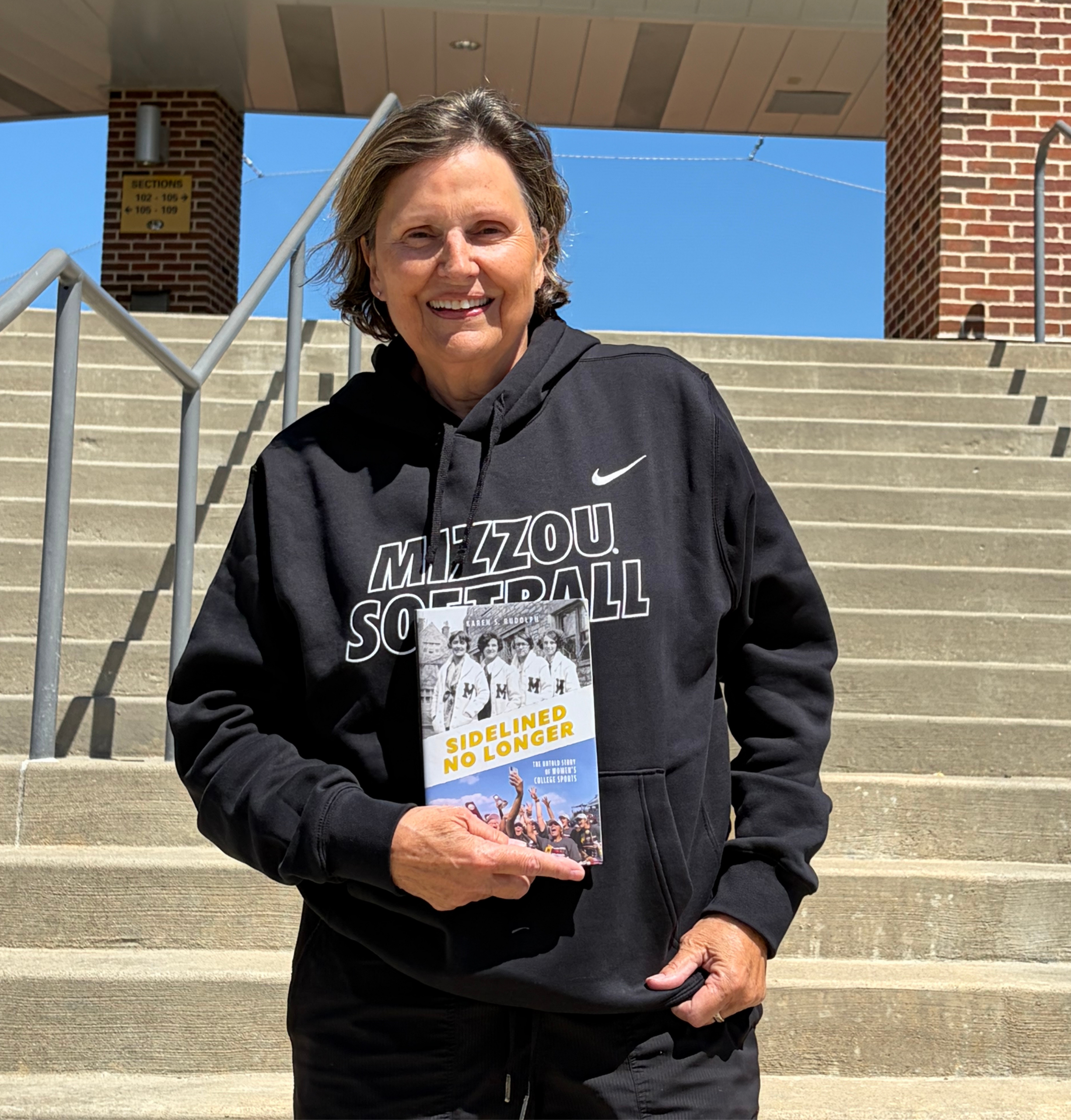
By Karen Rudolph
Author
Opportunity rarely appears on its own. Someone has to envision it, advocate for it, and build the structure for it. Importantly, it must persist long enough for others to benefit.
My work as a leadership thinker happens to draw its evidence from one of the most remarkable transformations in American sports: how women moved from Play Days to Pay Days, from the bleachers to the ballfields to corporate boardrooms.
Previous leaders in women’s sports created opportunities women enjoy today. That prompts a larger question for today’s leaders: What opportunities are we creating for the people coming next?
What could exist ten years from now because someone was willing to act today?
I write about women’s sports history because it offers extraordinary lessons in cultural change. Women’s sports is the lens, while leadership is the lesson.
From the 1970s, when Title IX began reshaping the college sports landscape, to today, women’s athletics have grown dramatically in skill, visibility, entertainment value and audience.
I played college basketball and softball in the 1970s, when dozens of fans might show up, mostly parents, a few retirees and presumably anyone who wandered into the gym looking for someplace warm.
We brushed it off. We simply wanted to play, to compete, to perform.
By the late 1990s, attitudes were changing, although sometimes slowly. My daughter had played six years of Southern California club volleyball when, on the first day of her junior year, a teacher surveyed his students, inquiring about their various interests. Finally, he asked, would students who considered themselves athletes raise their hands?
My daughter, who eventually became a 6-foot-2 Division I middle blocker, sat still, her hands on her desk.
The teacher knew both parents had been former professional athletes. Curious, he asked why she didn’t raise her hand.
Aghast, she replied, “I’m a volleyball player, not an athlete.”
Today, she is a nationally known volleyball recruiting advisor who teaches life, communication and social skills. Apparently, she embraced being an athlete somewhere along the way.
Today, women are developing enormous fan bases. Professional teams fill NBA arenas. College volleyball drew 40,000 spectators to AT&T Stadium, home of the Dallas Cowboys. Women’s soccer is setting attendance records and featured in popular television shows like Ted Lasso. The Golden State Valkyries are the first WNBA organization valued at a billion dollars. College athletes have visibility and opportunities previous generations could scarcely imagine.
But behind every opportunity celebrated today was someone, and often groups of people, willing to lead before the outcome was certain. My research recognizes and tells the stories of those unsung trailblazers who laid the groundwork for the energy and enthusiasm surrounding the women’s sports community today.
Women’s sports is the lens through which I study change, but leadership is the larger lesson. People create opportunity when they have the courage to challenge limitations and institutions, the vision to imagine something better, and the persistence to turn possibility into lasting change.
Leadership begins by seeing what does not yet exist.
We often assume leaders take charge of something already established. Women’s sports history demonstrates something different. Leadership sometimes means creating the thing that others eventually will lead.
As a high school junior, I stood before my local school board and shared a projected budget and a petition signed by hundreds of classmates asking the district to start a girls basketball team the next year. The board members peppered me with questions. The final one was memorable.
“Karen, how will girls feel when they are cut from the team after tryouts?”
The question was intended to throw me off. But I answered slowly, “How do you think boys feel when they are cut from the team after tryouts?” Quickly thereafter, the vote was approved. Unanimously, I might add. My high school was starting a girls’ competitive sports program.
My advocacy continued in college, as I represented a generation of young women on a campus-wide committee evaluating our university’s implementation of Title IX.
Leadership requires courage before there is consensus. In Sidelined No Longer: The Untold Story of Women’s College Sports, the women I researched and interviewed made consequential decisions amid uncertainty, disagreement and sometimes ridicule.
At the University of Missouri in 1979, Jean Cerra thought she should be considered for a position as Associate Athletic Director, a role that would include oversight of men’s programs, unheard of for a woman at the time.
She reminded the athletic director that he had repeatedly praised her administrative skills. Then she pointed out that what qualified her for the position existed “from the neck up and not from the neck down.”
He reconsidered. Two weeks later, an administrative restructuring allowed him to hire Cerra and another candidate as Associate Athletic Directors.
At San Diego State, critics wondered whether Mary Hill, one of the nation’s first women athletic directors at a major football-playing university, would put lace on the football uniforms. History does not record whether anyone checked the equipment room.
At Princeton, women’s athletic director Merrily Dean Baker approached the renowned men’s rowing coach for help starting a women’s team. He retorted that women would be in his boathouse “over my dead body.”
Baker stood firm. She hadn’t come to ask his permission. She had come to ask for his help.
She persisted, building a program with used equipment and whatever practice times were available. Four years later, Baker and that same coach cried together as they watched two Princeton women rowers win Olympic medals in Montreal.
Leadership doesn’t wait until everyone agrees. It develops the conviction to move forward when the evidence, values and possibilities point toward change.
Creating opportunity is different from simply opening a door.
A door can be opened temporarily. Lasting opportunity requires structure.
Consider what had to be built around women’s college sports:
- Scholarships.
- Championships.
- Budgets.
- Recruiting systems.
- Facilities.
- Coaching positions.
- Administrative authority.
Access says, You may come in.
Leadership asks, What must be built so you can succeed once you’re here?
The women in Sidelined No Longer were more than advocates. They were builders, helping design systems capable of sustaining opportunity.
Lasting change is rarely the work of one heroic leader.
Women’s sports was not transformed by one person, one law, one organization or one moment. Different affinity groups clamored to be heard.
- Athletes, who pushed for increased competition, travel and opportunities.
- Coaches, who wanted bigger budgets and different rules structures.
- University presidents, who differed on how to develop women’s sports while complying with the federal government’s threats to withhold research funds because of Title IX.
- Educators, who started women’s sports as an extension of college physical education programs and endorsed a more limited, education-focused basis. They felt passionately that intercollegiate athletic budgets were out of control, too expensive and too commercialized.
Athletes, coaches, educators, administrators, university presidents and government officials brought different priorities to the debate. Colleagues were divided.
College friends Dr. Christine Grant and Dr. Jean Cerra had attended graduate school together at the University of Iowa. When the NCAA voted to begin women’s championships for all levels in the 1981-82 school year, they found themselves on opposite sides of a philosophical divide.
Both wanted women’s sports to flourish. They disagreed about how to get there, and how fast. That is another leadership lesson worth remembering: people can share a destination without agreeing on the road.
Great leaders don’t simply cross bridges; they build them. The best leadership creates opportunities for people we may never meet.
Women working for change in the 1970s and early 1980s could not have imagined every consequence of their efforts: packed arenas, television contracts, NIL (Name, Image, Likeness) opportunities, expanding professional leagues, billion-dollar franchise evaluations, or stadiums and training facilities built specifically for women.
They didn’t personally know the athletes who would benefit decades later. But those pioneers, like Jean Cerra, and the women in Sidelined No Longer, can agree that what is seen today in women’s sports is the exclamation point of everything they imagined. Opportunity doesn’t simply happen.
Someone has to create it.
What can we imagine? What are we willing to challenge? What must we build?
And what will remain long after we are gone?