Why Every Generation Needs Bridge Builders
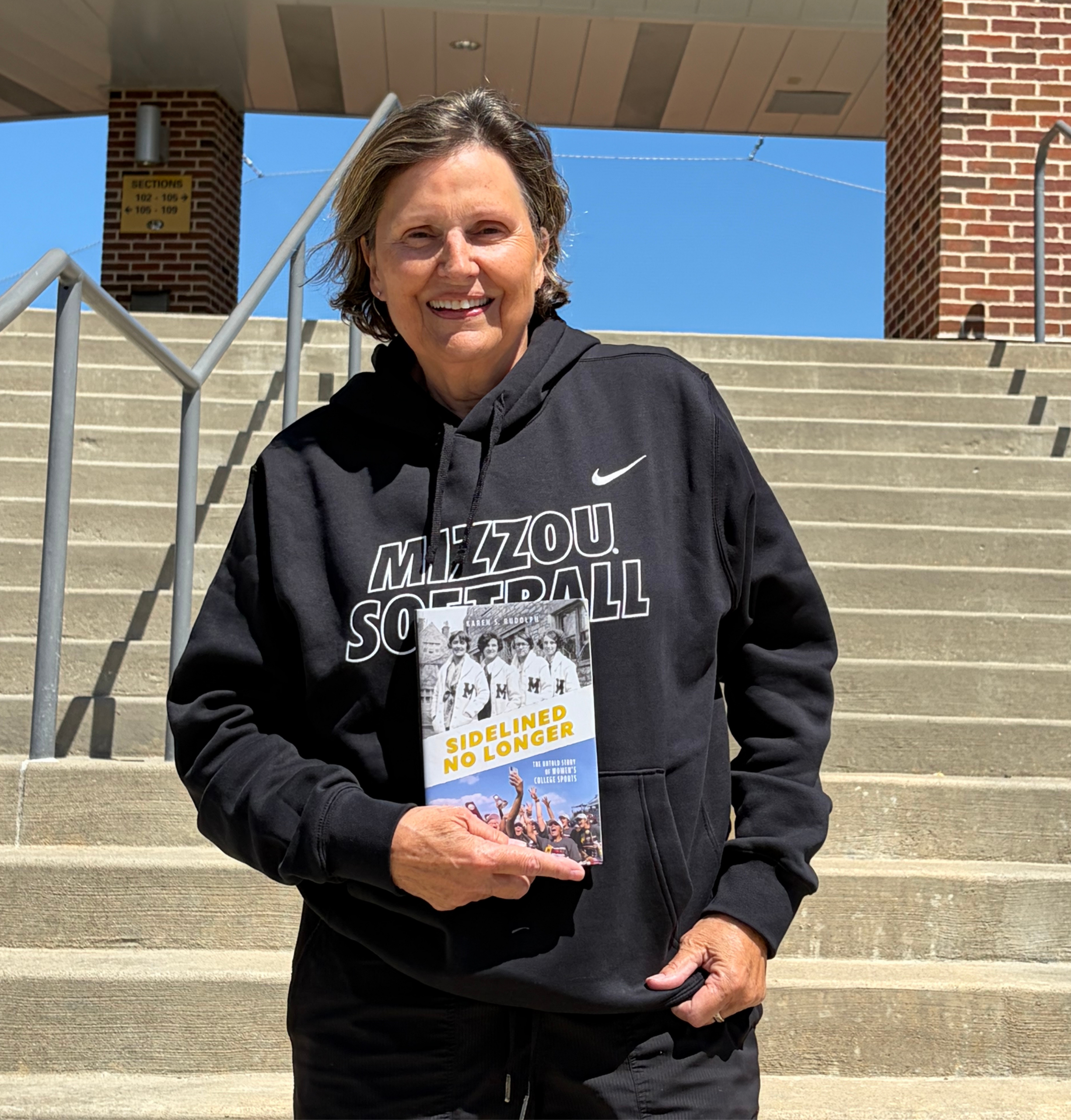
By Karen S. Rudolph
Author
None of us begins at the beginning. We are all beneficiaries of people who came before us. You might say, we are standing on someone else’s bridge.
As a University of Missouri student athlete back in the 1970s, I didn’t necessarily see all the people working behind the scenes to build a women’s athletic department. I knew my coaches, of course, but interacted with few administrators. Their offices were on the third floor of the Hearnes Center, territory I rarely visited and regarded as somewhat hallowed ground.
I had other priorities: basketball, softball, classes and, of course, living college life to the fullest. For a young woman who grew up in a small Missouri town, in a family that raised crops and cattle along K Highway in Andrew County, Missouri, Columbia offered a much bigger world.
My junior year of college proved pivotal. The university chancellor appointed a campus-wide committee to evaluate Missouri’s compliance with Title IX, the 1972 federal law prohibiting sex discrimination in education. I was invited to represent women student athletes. A report was due during the summer of 1976, detailing efforts across every academic and extracurricular area.
At about the same time, the chancellor ordered that men’s and women’s athletics be merged into one Department of Intercollegiate Athletics. The university needed someone who could help move women’s sports from its roots in physical education into the highly competitive world of intercollegiate athletics.
I was taking journalism classes that summer and was assigned to interview the newly hired Jean Cerra. She had been coaching volleyball and teaching at nearby Stephens College and had a calm, reassuring presence. I was 20 years old and concluded the job was in good hands.
The resulting newspaper feature story became my first published byline.
Jean immediately went to work, reviewing the Title IX report, developing schedules, building budgets, finding facilities and solving dozens of problems most student athletes never knew existed.
Including me.
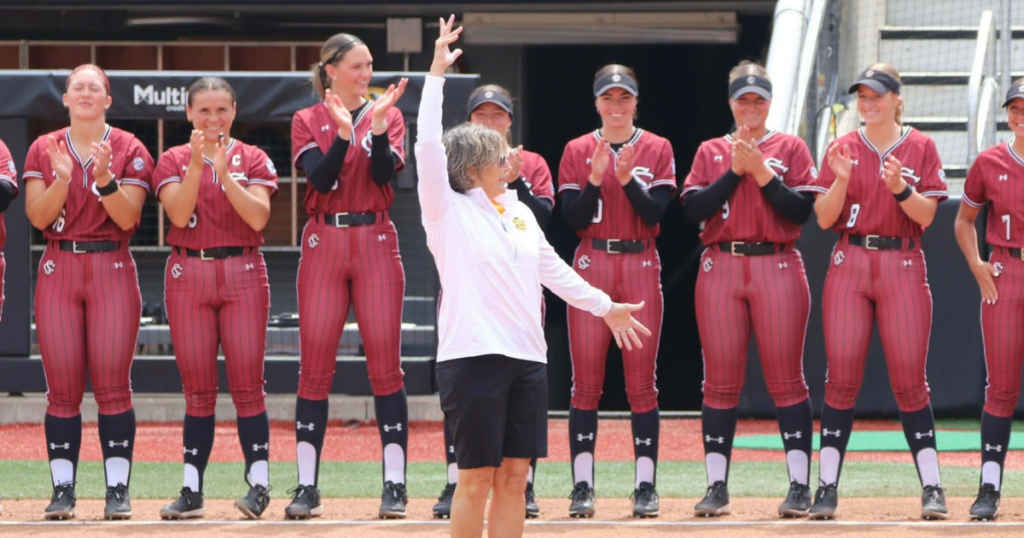
Our paths rarely crossed during my senior year. Nearly five decades later, at Missouri’s Celebration of Title IX and Women’s Sports, Jean was a keynote speaker. She described the obstacles women athletic administrators faced during those early years.
I sat there amazed, appalled, and energized as I listened. Why hadn’t I known any of this?
Leaders like Jean Cerra, among the first women athletic directors nationally, had no roadmap. They didn’t always agree about the best route forward, either.
This is what makes their story so important.
Leadership means more than opening a door of opportunity. A door can be opened, then shut again. A bridge requires planning, structure, cooperation and durability. It is built so others can travel farther. Opportunity without structure can disappear.
Jean Cerra and other early trailblazers wanted more for women athletes than simply an opportunity to play. They helped build systems to sustain opportunity. They built bridges and systems for:
- Scholarships
- Budgets
- Championships
- Facilities
- Recruiting
- Coaching positions
- Administrative authority
Bridges carry people in both directions. Older generations provide history, experience, institutional knowledge, perspective and lessons learned, sometimes the hard way.
Younger generations provide fresh ideas, technology, cultural perspectives, energy and different definitions of what is possible.
That is intergenerational leadership. Not, “Here’s how we did it, so this is how you should do it.”
Instead, “Here’s what we learned. What can you build from here?”
The intergenerational leadership principle can be applied to business, non-profits, community groups, and social organizations.
Every generation eventually reaches a point when benefiting from someone else’s work is no longer enough. We must move from beneficiary to builder.
We are seeing that moment now in women’s sports with increased attendance, record crowds, growing television audiences, sponsorships, investment opportunities, professional careers and athlete influence, all evidence of extraordinary progress.
Success creates responsibility. History gives us perspective from the things we inherit. Experience provides wisdom to build. New voices give us possibility so we can move ahead.
What will this generation build with its moment?
When I began researching Sidelined No Longer: The Untold Story of Women’s College Sports, I thought I was investigating an historical transformation. How did women’s sports reach today’s extraordinary levels of skill, visibility and enthusiasm when women of my generation were called ‘tomboys’ and ‘Amazons’ and discouraged from competing?
My parents taught us to respect history, although their version leaned toward the familiar warning that “those who fail to learn from the past are doomed to repeat it.” There’s nothing like a little historical doom to keep a child interested.
Fortunately, my high school history teachers made the subject come alive. It helped me prepare for writing the book. While researching it, I realized I was studying something larger than sports history.
I was studying leadership. Women’s sports is the lens for this history.
How do people lead when there is no clear path to reach a destination? The women who helped transform college athletics faced resistance at nearly every turn.
At the University of Alabama, for example, students complained in the student newspaper about money being spent on women’s athletics, arguing that those dollars could be better spent on Bear Bryant’s football program. Some fans thought women athletic directors would put lace on the football uniforms.
The eleven women at the heart of Sidelined No Longer, along with their allies, faced tremendous resistance while trying to change a national culture that had long relegated women’s competitive sports to the sidelines.
Their experiences inspired me to develop the BRIDGE LEADERSHIP FRAMEWORK, a practical model for understanding how meaningful change happens and how leaders can create opportunities that last.
Those trailblazing women’s athletic administrators who built relationships, understood the challenges around them, identified new possibilities, made courageous decisions, brought others with them, and ultimately expanded opportunities for future generations, didn’t wait for perfect circumstances.
Their lessons extend far beyond athletics. Sidelined No Longer relates to sports in the same way that Hidden Figures relates to math. Hidden Figures is a popular feature movie about the African American women who calculated the numbers to get astronauts to the moon and back.
The broader lesson from both is the impact of leadership on cultural change. The lessons apply to businesses, schools, non-profits and organizations navigating change, generational transitions, disagreement and uncertainty.
Consider the Bridges You Inherited
Consider the bridges you inherited.
Who advocated for you? Who mentored you? Who changed a policy, created an opportunity or took a risk that ultimately benefited you? What was the beginning for you?
As a first grader, I watched the AAU (Amateur Athletic Union) women’s basketball national tournament in St. Joseph, Missouri. My dad took my twin sister and me, and I was mesmerized. The players wore shiny satin uniforms, competed hard and looked like they were having tremendous fun.
I wanted to do that ‘Someday.’ But I had to tuck away that dream, because little girls didn’t grow up aspiring to those things. There were few opportunities. It was pre-Title IX. But I continued to dream of ‘Someday.’
For little girls growing up before Title IX, ‘Someday’ didn’t come with many options. Through junior high and into high school, we participated in “play days,” one-day events where girls gathered for sports and socializing, usually with little training and participants assigned to random teams.
It wasn’t exactly a pathway to the Final Four.
Still, I kept dreaming.
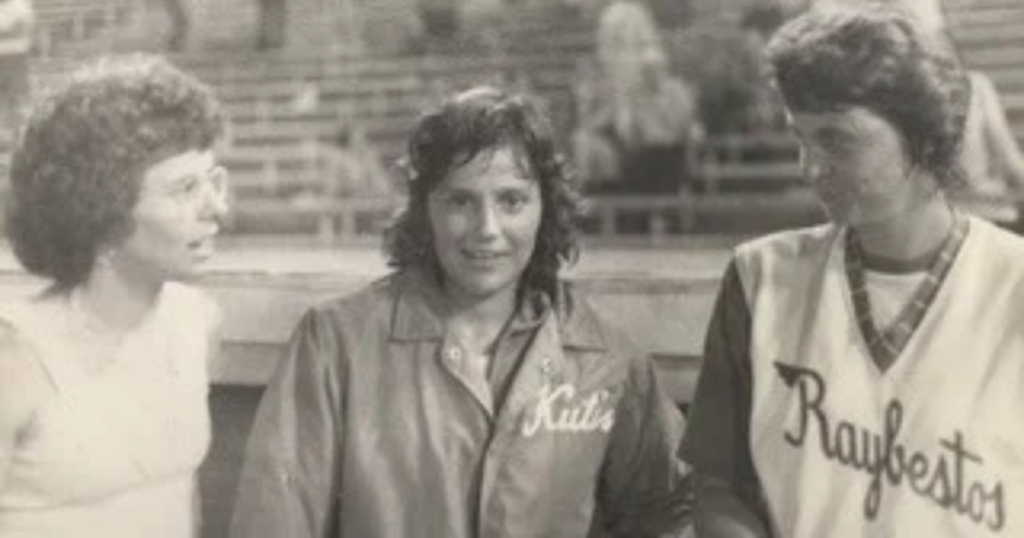
Then, people like Nanetta and Warren Carter created opportunities where none had existed before. They invited my sister and me to join the North Missouri CTs softball team, and by the time I finished high school, we had won four Missouri Women’s Amateur Softball Association state championships.
We played nearly 100 games during the summer and traveled from Minnesota to Texas, Colorado to Indiana, at a time when few teams did that.
Nanetta and her husband, Warren, sponsored our team and paid for nearly everything: uniforms, tournament entry fees, and travel and hotels. There were no coaching fees. It was unusual to be that well-sponsored.
Mrs. Carter expected us to look and behave like champions. That meant giving our best effort, preparing carefully, arriving at least 15 minutes before the required time, polishing our cleats, saddle soaping our gloves, and ironing our uniforms.
For Mrs. Carter, in order to be a good softball player, you apparently needed both a good arm and domestic proficiency with an iron.
The Carters scheduled us against the toughest teams in the Midwest. Our end-of-season team parties were epic. It was years before I understood how unusual those opportunities were.
Success did more than teach me how to compete. It gave me the confidence to try other things.
That is the legacy of leadership.
Leadership legacy is measured by more than recognition, titles or accomplishments. Its greatest measure may be the opportunities that remain long after the leader is gone.
For Nanetta Carter, it meant all the lives influenced, the education degrees obtained, the success of those she considered daughters.
Who will benefit from something that you build?
Today, as I travel and speak to alumni groups, college audiences and older adults through lifelong learning programs, I frequently hear from women who ask the same question: Why wasn’t I allowed or even encouraged to play sports?
Their stories remind me why history matters.
We cannot change the opportunities that previous generations were denied. But we can learn from those experiences and make different choices for the generations that follow.
That is the purpose behind the BRIDGE LEADERSHIP FRAMEWORK. It provides a way to begin conversations about leadership, collaboration, legacy and navigating change across generations.
It asks us to do more than admire what earlier leaders accomplished, and, most importantly, consider what their work now requires of us.
Which brings me back to where I began.
None of us begins at the beginning.
Someone advocated for us. Someone challenged a rule. Someone created a team, funded a program, changed a policy, opened a door. Someone built a bridge.
We honor those people by doing more than remembering them. We honor them by continuing their work.
Every generation inherits something from the one before it. Every generation also has something new to contribute.
The question is what we choose to do with our turn.
Will we simply cross the bridges others have built for us?
Or will we build the next one?
We inherit.
We build.
We pass it forward.